
Tide Review: Our Verdict
Tide Review: Our Verdict
Tide provides a credible combination of business banking and financial administration tools. Its main strength is convenience: payments, invoicing, expense records, accounting connections and savings can be managed through one digital platform.
The Free plan has no monthly plan fee and includes five bank transfers each month. This can provide reasonable value for a sole trader, freelancer or small company with relatively simple banking activity. It becomes less compelling when a business makes many chargeable transfers, frequently deposits cash or regularly withdraws money from ATMs.
Paid plans add larger transfer allowances, team features, additional accounts and higher standard Instant Saver rates. They offer better value when their allowances and tools are used consistently.
Tide has no branches. Cash-heavy firms should examine deposit charges, while businesses with complex international or treasury needs should compare full-service banks.
Our Tide review finds Tide most persuasive for digitally managed, straightforward small businesses. Free provides a low-commitment entry point and the platform can reduce reliance on separate administration tools.
- Best for
- Digitally managed sole traders, freelancers and small companies
- Main strength
- Business banking and administration tools in one platform
- Main limitation
- Usage charges and no branch network
Snapshot
Tide at a Glance
| Area | Tide offering |
|---|---|
| Best suited to | Digitally managed sole traders, freelancers and small companies |
| Monthly plan fee | From £0 with Tide Free |
| Account provider | ClearBank provides new Tide business bank accounts |
| FSCS protection | Eligible ClearBank deposits protected up to £120,000 |
| Cash deposits | Available through the Post Office and PayPoint, with fees |
| Business savings | Tide Instant Saver with variable, tiered rates |
| Company formation | Available from £14.99 for eligible single-shareholder companies |
| Account access | Tide app and Tide on the Web |
| Main strength | Banking and business administration in one platform |
| Main limitation | No branches and potentially significant usage charges |
Overview
What is Tide?
Tide is a UK business financial platform rather than a traditional high-street bank. It designs and operates the app and web interface through which members manage business accounts and access related services.
Customers can receive and send payments, use a business card, set up Direct Debits, create invoices, organise expenses and connect accounting software. Tide also offers savings, company formation and other business services.
The platform is principally aimed at small businesses. It supports sole traders, freelancers and directors of limited companies, subject to Tide's eligibility and verification requirements.
There are no Tide branches, and account management is centred on the app. Web access is available, but members need the Tide app to authorise access. This suits digital businesses better than those relying on branch support or frequent cash deposits.
Regulation
Is Tide a Bank?
No. Tide Platform Limited is not itself a bank.
Tide designs and operates the Tide platform. It is authorised by the Financial Conduct Authority under firm reference 900843 for specified electronic money and payment services. Tide is also authorised and regulated for certain credit and insurance broking activities under a separate firm reference.
New Tide business bank accounts are powered by ClearBank. ClearBank is a UK-authorised bank regulated by the Prudential Regulation Authority and the Financial Conduct Authority. Its Financial Services Register number is 754568.
Customers use Tide's interface, while ClearBank provides the underlying account and payment infrastructure. ClearBank describes this arrangement as embedded banking.
Some existing members may hold electronic money accounts provided by PrePay Technologies Limited. These use safeguarding rather than FSCS protection. Customers can identify their provider through account documents.
This distinction matters when assessing deposit protection. It does not normally change how a customer makes routine payments through the app, but it determines which regulated entity holds the money and what protection applies.
Protection
Is Tide Safe and FSCS Protected?
Eligible deposits held in Tide business current accounts powered by ClearBank are covered by the Financial Services Compensation Scheme, subject to the scheme's rules.
The standard FSCS deposit protection limit increased to £120,000 per eligible person or entity, per authorised institution on 1 December 2025. If a customer has multiple eligible accounts with ClearBank, the balances are generally combined when the protection limit is calculated. The limit does not apply separately to every Tide account.
The treatment of business deposits depends partly on the legal structure:
- A sole trader is not legally separate from the individual. Eligible personal and business deposits held with the same authorised banking group are generally combined.
- An eligible limited company is a separate legal entity and may receive its own protection allowance.
- Certain businesses and financial firms may not meet the FSCS eligibility rules.
The FSCS deposit protection guidance should be consulted if you hold a large balance or have other money with ClearBank.
Tide Instant Saver is also powered by ClearBank, so eligible savings deposits fall within the same overall ClearBank protection calculation. The current account and savings balances do not each receive an independent £120,000 allowance.
Tide's published security features include two-factor security, card freezing and Confirmation of Payee. These measures can reduce certain risks, but no account or payment system is immune from fraud. Customers remain responsible for protecting their devices, credentials and payment instructions.
Features
Tide Business Account Review: Key Features
This part of our Tide review looks beyond Tide’s feature list to consider how its business-account tools could fit into everyday work.
Everyday payments and account management
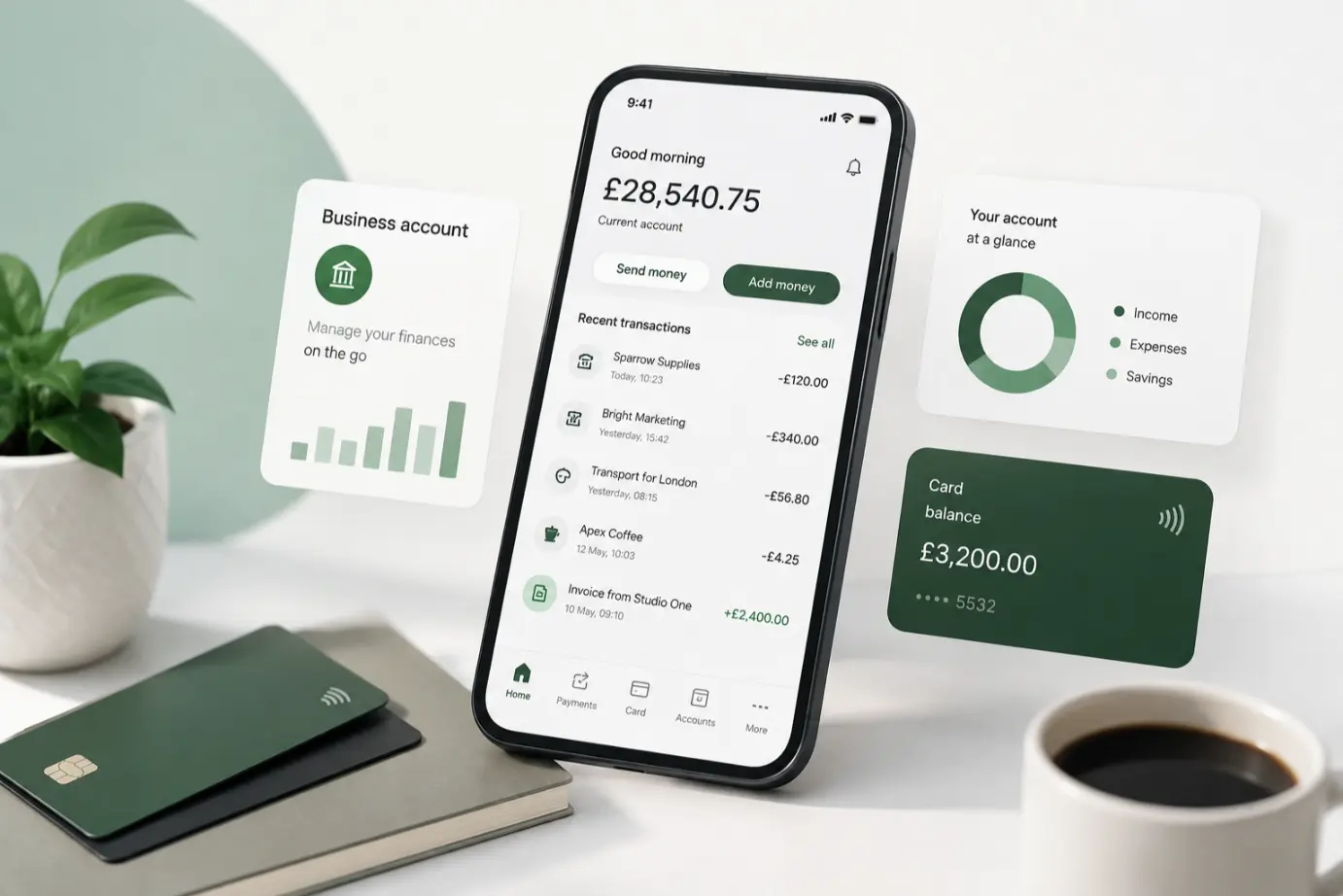
As explained in our Tide business account guide, the current account provides UK account details and a business card. Customers can receive payments, make bank transfers, pay Direct Debits and use the card for business spending.
Balances, transactions and other functions are also accessible through Tide on the Web, providing a larger-screen option for administration.
Account and transaction limits apply. Members can view relevant limits in the app and may request increases, although approval is not automatic.
Invoicing, expenses and accounting
Tide provides invoicing, receipt capture and expense categorisation to help match receipts and transactions and track unpaid invoices.
Free, Smart and Pro include three invoices monthly, while Max includes unlimited invoicing. Frequent invoicers should compare additional functionality and plan costs.
Accounting integrations are available across the plan range. Smart adds a Xero Connector, while Pro and Max include broader Tide accounting services.
These tools can help organise records, but they do not remove the business owner's responsibility for accurate bookkeeping, tax returns or professional advice.
Team access
Tide supports team access and expense cards. Smart includes one team-card seat, Pro includes two and Max includes three. Additional Tide Team Expense Cards currently cost £5 per card each month.
This can be helpful where employees need controlled access to company funds. A growing business should compare the total cost of its required cards and permissions rather than judging the plan only by its headline monthly fee.
Cash and cheque deposits
Tide supports cash deposits through the Post Office and PayPoint.
Free plan Post Office deposits cost a minimum of £2.50, with a 0.99% charge applying above £500. Smart, Pro and Max members pay a minimum of £2.50 or 0.5% for deposits above £500. PayPoint deposits cost 3% across the current plan range.
Digital cheque deposits currently cost 90p, comprising a 70p cheque fee and the standard 20p transfer charge.
The availability of deposit routes is useful, but the charges make Tide less attractive for businesses receiving significant amounts of cash.
International use
Tide supports international card use and international bank transfers. Tide Free charges a 2.75% foreign exchange fee on non-GBP card transactions, foreign-currency ATM withdrawals and GBP card payments made outside the UK.
Paid plans remove Tide's 2.75% card FX fee. Other international, SWIFT, intermediary or recipient charges may apply, so confirm pricing for each destination.
Pricing
Tide Plans and Pricing
Tide offers Free, Smart, Pro and Max. This comparison uses Tide's published pricing reviewed on 21 August 2026.
| Plan | Monthly fee | Bank transfers | Standard Instant Saver rate | Selected features |
|---|---|---|---|---|
| Free | £0 | 5 per month, then 20p each | 2% AER variable | Core account, three invoices monthly and accounting integrations |
| Smart | £12.49 | 30 per month, then 20p each | 2.5% AER variable | One additional account, one team-card seat and Xero Connector |
| Pro | £27.49 | Unlimited, subject to fair use | 3% AER variable | Two additional accounts, two team-card seats and Tide Accounting |
| Max | £69.99 | Unlimited, subject to fair use | 3.25% AER variable | Three additional accounts, three team-card seats, unlimited invoicing, payroll and 0.5% card cashback |
New members currently receive introductory Instant Saver rates of up to 4% AER variable for four months. Rates are tiered and the highest rate applies only to the highest qualifying balance tier.
Max's card cashback is separate from the STARTUP200 new-customer promotion and is subject to Tide's plan terms.
Value depends on use. Estimate monthly transfers, invoices, team cards and international card activity before choosing. Paid plans make most sense when their allowances replace charges or separate software costs.
Pricing and plan features can change. Confirm the current terms directly with Tide before applying or upgrading.
Pricing
Is the Free Tide Business Account Really Free?
There is no fee to open a Tide business account, and Tide Free has no monthly plan fee. However, transaction and service charges can still apply once you start using the account. has no monthly plan fee, but it is not completely free to operate.
Five bank transfers are included each month. Further inbound and outbound transfers generally cost 20p. GBP cash withdrawals of up to £500 cost £1, while larger withdrawals attract a percentage charge. Cash and cheque deposits also carry fees.
Free members pay Tide's 2.75% foreign exchange charge on relevant international card purchases and ATM withdrawals. Card purchases in GBP within the UK are free from a Tide transaction charge.
This structure can work for a sole trader receiving a few client payments and rarely handling cash. It can become expensive for a retailer depositing cash, an agency making many contractor payments or a business regularly using ATMs. Compare the expected total cost of Free with the subscriptions and allowances of paid plans.
Our Tide account review finds that Free removes a fixed commitment, not the need to understand transaction pricing.
Savings
Tide Instant Saver
Tide Instant Saver is an instant-access business savings account powered by ClearBank. Interest is calculated daily and paid monthly, and Tide states that withdrawals are available without notice or withdrawal penalties.
New members can receive an introductory tiered rate of up to 4% AER variable for four months. The highest rate currently applies to balances between £1 million and £10 million; lower tiers receive lower rates.
After the introductory period, the applicable variable rate is linked to the customer's Tide plan. At the review date, the published headline plan rates range from 2% AER on Free to 3.25% AER on Max.
Instant Saver can separate working capital or tax reserves while retaining access. Not every deposit earns 4%, so assess whether a paid plan's higher ongoing rate justifies its subscription.
Eligible Instant Saver deposits are included within the depositor's overall ClearBank FSCS limit. Read Tide's Instant Saver rates and terms before depositing.
For a closer look at the savings rates, balance tiers and account conditions, read our Tide Instant Saver guide.

Company formation
Tide Company Formation
Tide offers an online company formation route for new UK limited companies. At the review date, the standalone service costs £14.99, compared with the £100 Companies House online incorporation fee.
Tide is a Companies House Authorised Corporate Service Provider and submits the incorporation application to Companies House. Companies House remains responsible for registering the company.
The service currently includes:
- Company incorporation for eligible applicants
- An emailed Certificate of Incorporation
- Memorandum and Articles of Association
- Share certificates and a company register
- A Tide business account, subject to approval
- PAYE registration with HMRC
Tide currently accepts single-shareholder formation applications. Complex ownership structures may need another route.
Formation and bank-account approval are distinct. Applicants must complete identity verification and satisfy Companies House and Tide requirements.
The integrated route may reduce administration for straightforward startups. Founders needing bespoke documents, multiple shareholders or advice should consider specialist support.
Eligible applicants can form a limited company with Tide. Terms and eligibility apply.
Read our Tide company formation guide for more information about the £14.99 registration route, eligibility and what is included.

Promotion
Tide Cashback and STARTUP200
Eligible new customers using STARTUP200 may qualify for up to £200 cashback through two separately assessed rewards.
The first reward is £75. To qualify, an applicant must open an eligible Tide business current account using STARTUP200 and spend at least £100 on the Tide card within 30 days of opening the account.
The additional £125 relates to Tide Instant Saver. The customer must open the savings account, deposit at least £5,000 within seven days and maintain a balance of at least £5,000 for the first 30 days.
The full £200 requires successful qualification for both elements. STARTUP200 does not guarantee approval or cashback. Tide sets the rules and assesses each reward.
No fixed expiry date is published on StartupCode. Tide may change or withdraw the promotion, so applicants should check the current landing-page terms before applying.
The promotion can improve the initial proposition, but transaction costs and longer-term suitability matter more than a one-off reward.
View the current Tide business account offer, or return to our Tide promo code guide for a focused explanation of STARTUP200. We may receive a commission if you apply through this link. Eligibility and terms apply.
Pros and cons
Tide Account Pros and Cons
The following Tide account pros and cons reflect the product as a whole rather than treating every feature as universally beneficial.
| Pros | Cons |
|---|---|
| No fee to open an account, and Tide Free has no monthly plan fee | Usage charges still apply on the Free plan |
| Five monthly transfers are included on Free | Further transfers generally cost 20p each |
| Mobile-first account management through the Tide app, with web access available | No Tide branch network |
| Invoicing, expense categorisation and accounting tools can reduce routine administration | Free, Smart and Pro include only three invoices monthly |
| Four plans provide room to add features and allowances | Paid plans may be expensive if their allowances go unused |
| Eligible ClearBank deposits receive FSCS protection | Protection is shared across eligible ClearBank deposits |
| Instant Saver provides access to business savings | The advertised 4% rate is introductory, variable and tiered |
| Cash deposits are possible through Post Office and PayPoint | Cash deposit charges can be significant |
| Company formation is available for £14.99 | The formation route currently accepts single shareholders |
| Team access and expense cards are available | Extra team cards can add monthly costs |
| Paid plans remove Tide's card FX fee | Other international payment charges may still apply |
| STARTUP200 may provide up to £200 cashback | Cashback and account approval are not guaranteed |
| In-app chat support is available 24 hours a day | Phone support hours and priority depend on the Tide plan |
This balanced Tide business account review shows why the same feature can have different implications. Cash deposits are available, for example, but availability does not make Tide cost-effective for a cash-heavy business.
Suitability
Who Tide Is Best Suited To
Sole traders
Tide may suit a sole trader wanting separate business finances without a monthly plan fee. Its administration tools can also simplify records.
A sole trader receiving cash or making many monthly transfers should calculate expected charges before choosing Free.
Freelancers and contractors
Freelancers may benefit from digital invoicing, payment tracking and remote account management, particularly where income arrives by transfer and expenses are paid by card.
Businesses receiving foreign currencies or making frequent overseas payments should examine international costs and currency support in more detail.
New limited companies
A newly incorporated company may value the £14.99 formation route and accompanying business account application. This is most relevant to straightforward, single-shareholder companies.
Directors should remember that formation does not provide tax or legal advice, and business-account approval remains subject to Tide's checks.
Startups and small businesses
Tide may suit small teams wanting cards, spending controls, invoicing and basic accounting in one platform. Paid plans add larger allowances and tools.
A growing company should reassess its plan as transaction patterns and team size change.
Suitability
Who Tide Might Not Suit
Tide is unlikely to suit every business.
Cash-intensive companies may find percentage-based PayPoint charges and Post Office fees expensive. Businesses that regularly need coins, change services or in-person banking support may prefer a high-street provider.
High-volume payment businesses should compare Pro or Max with competing bulk-payment arrangements. Tide's account and transaction limits may also matter.
For international use, currency availability, SWIFT costs, intermediary fees and recipient charges require separate checking.
Larger organisations may need treasury management, trade finance, advanced approval workflows or relationship support beyond Tide's focus.
Some industries fall outside Tide's risk appetite. Basic eligibility does not guarantee acceptance.
Application
Opening a Tide Business Account
Eligible sole traders, freelancers and company directors can apply. Applicants must be at least 18, have a valid UK mobile number and use a supported device.
Sole traders generally need a valid UK home address and HMRC registration. Limited company directors must operate a Companies House-registered business.
The application requests personal, identity and business information. Tide may require supporting documents and a selfie, and some applications need further review.
If using STARTUP200, enter it in the referral or promo code field before submitting the application. Starting an application does not guarantee approval, and approval alone does not guarantee cashback.
Applicants should read Tide’s current membership requirements and check whether their business type or industry is supported.
If Tide appears suitable, you can apply for a Tide business account. We may receive a commission if you apply through this link. Terms, eligibility and qualifying requirements apply.
Fees
Tide Fees: What Should You Watch Out For?
The most important charges depend on how the account will be used.
Transfers: Tide Free includes five and Smart includes 30 bank transfers monthly. Further transfers generally cost 20p. Pro and Max publish unlimited allowances subject to applicable terms and fair-use rules.
ATM withdrawals: GBP cash withdrawals of up to £500 cost £1 across the plan range. Larger withdrawals currently cost 0.25%.
Cash deposits: Free members pay a minimum of £2.50 at the Post Office, rising to 0.99% for deposits above £500. Paid-plan members pay a minimum of £2.50 or 0.5% above £500. PayPoint charges 3%.
International card use: Free charges 2.75% for relevant overseas and foreign-currency card activity. Paid plans remove Tide’s card FX fee, but other charges may remain.
Team cards: Additional cards beyond the plan allowance currently cost £5 per card monthly.
Subscriptions: Smart, Pro and Max create a recurring fixed expense. Their value depends on whether the business uses the included transfers, team seats, savings rate and administration tools.
Estimate costs from your actual monthly activity rather than relying on the headline price.
Day-to-day
What Is Tide Like for Everyday Business Banking?
Tide brings payments, categorised expenses, invoices and receipts into one interface. Owners can pay suppliers, manage Direct Debits and monitor cash flow from the same platform.
A freelancer might create an invoice, receive payment and categorise related expenses. A director could provide team access, issue an expense card and move surplus cash into Instant Saver.
The limitations are equally practical. Cash deposits cost money, ATM withdrawals are chargeable and the web service still relies on access to the app for login. Some accounting, payroll, invoicing and team features require paid plans or additional charges.
Our Tide bank account review finds the platform strongest where a business operates digitally and can use several connected tools. It is weaker where branches, substantial cash handling or complex services are central.

Methodology
How We Reviewed Tide
This Tide review assesses Tide as a business account and financial administration platform for UK sole traders and small companies.
We reviewed Tide’s pricing, charges, tools, savings, formation service and promotion. We checked its banking structure and FSCS statements against Tide, ClearBank and FSCS sources.
Our verdict considers pricing, functionality, limitations and suitability for different business models. This is a research-led editorial review based on current product documentation and authoritative regulatory sources. We do not assign a numerical score because value depends heavily on each business’s transaction patterns and service requirements.
Because Tide can change its plans, rates and charges, we review this article periodically and date any substantive update.
FAQs
Tide Review FAQs
Final verdict
Final Verdict
Our final Tide review verdict is that Tide deserves consideration from UK sole traders, freelancers, startups and small companies seeking a digitally managed business account.
Tide’s main strength is combining banking and administration. Businesses can receive payments, organise expenses, issue invoices, connect accounting software and manage savings within one platform.
Tide Free removes the monthly plan fee, but value depends on use. Businesses making frequent payments, depositing cash or using ATMs should calculate likely charges and compare alternatives.
Tide is less persuasive for businesses requiring branches, complex international services, cash processing or treasury support. Paid plans must justify their recurring cost through useful allowances and tools.
STARTUP200 may provide eligible applicants with up to £200 cashback. Treat it as a conditional benefit, not a reason to overlook unsuitable pricing or features.
If Tide matches your operational needs, view the current Tide business account offer. StartupCode may receive a commission. Account approval and cashback are not guaranteed, and Tide’s terms and eligibility requirements apply.
Account approval and any promotional cashback are not guaranteed. Terms and eligibility apply. This review is editorial and independent; Tide sets all product terms, pricing, eligibility and rewards.